

A dentist can play a real role in helping you — and the person sleeping next to you — sleep better.
Snoring
When snoring is about more than noise
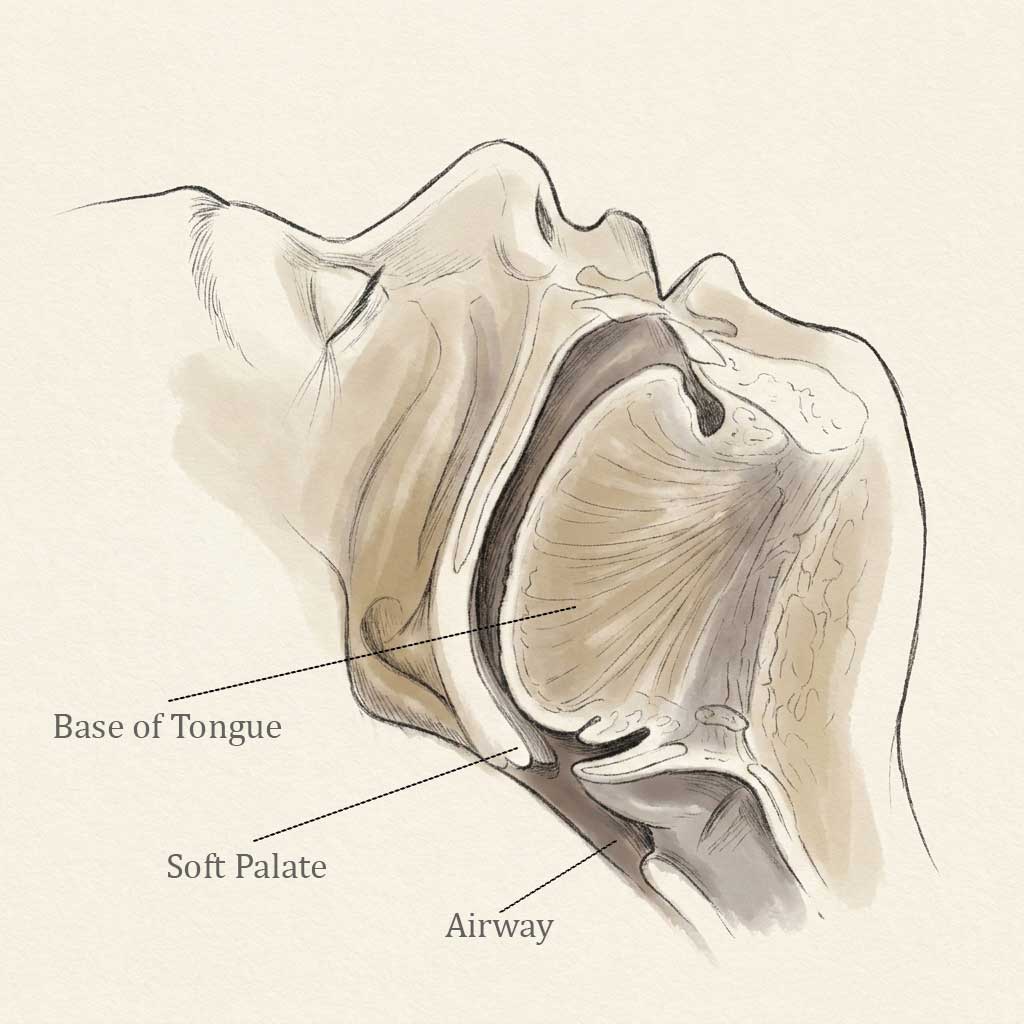
Snoring
What's actually causing it
Snoring happens when airflow through your mouth and nose is partially blocked during sleep, and it can be a sign of an underlying issue rather than just a disruptive noise. While many people try over-the-counter solutions or lifestyle changes first, a dentist can play a genuinely useful role in addressing the cause.
Four common causes
Several factors can contribute to snoring. Obstructed nasal airways — caused by chronic congestion or structural issues like a deviated septum — can block the nasal passage. Carrying extra weight around the neck and throat can put pressure on the airway, making it more likely to collapse during sleep. Sleeping on your back can let the tongue and soft tissues fall into the back of the throat. And when the muscles in the tongue and throat relax too much during sleep, they can partially block the airway — this is where a dentist can help.
How a dentist can help
Oral appliance therapy
Dentists can design and fit custom-made oral appliances that help keep your airway open during sleep. Similar to a mouthguard, these devices are worn at night and work by gently repositioning the jaw and tongue to prevent the airway from being blocked.
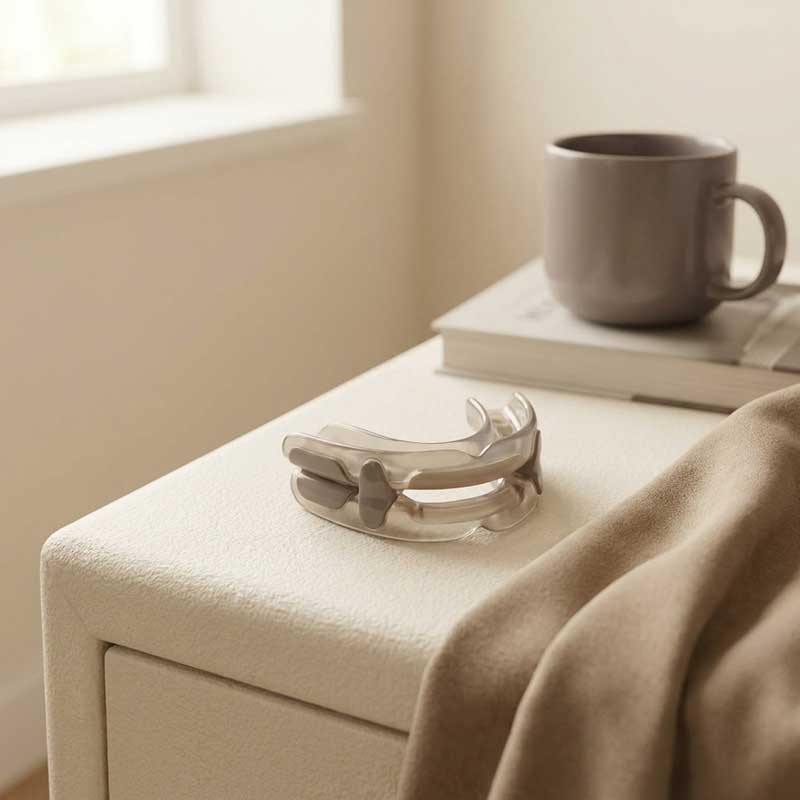
Working with sleep specialists
Care that goes beyond the dentist's chair
Where it’s needed, we can collaborate with sleep specialists and physicians to provide a more complete approach to managing your snoring, making sure it’s properly evaluated and managed from every angle.
Taking the first step
A quieter night, for both of you
Snoring doesn’t have to be something you just live with. Speaking to a dentist is a genuine first step toward better sleep — for you, and for anyone sleeping next to you.
Ready for a better night's sleep?
Contact us now to arrange an appointment.